By Tom Benson
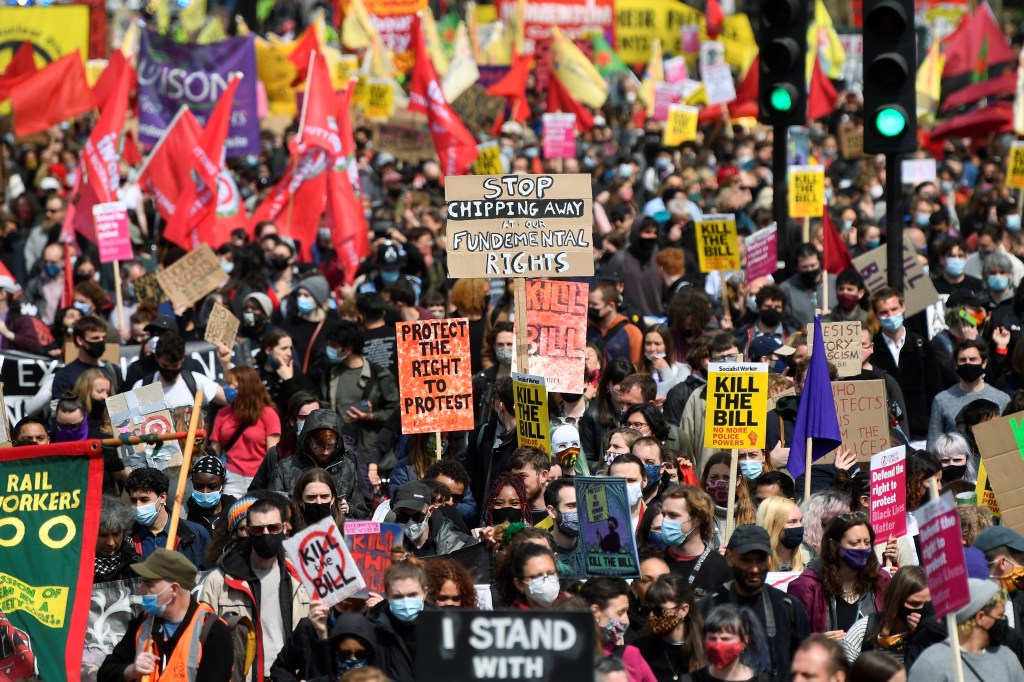
I remember being in my third year of University at Liverpool John Moore’s and due to a few personal circumstances that led to me not doing as well as I’d hoped with my second year results, I took the tough decision to commute in via train from Manchester for my final year to attend any lectures or other group work that I had to do. One Monday morning, I got to Manchester Piccadilly and wandered over to the platform where I usually got the train, only to see up on the board that a load of trains had been marked as cancelled or delayed. That wasn’t really an irregular thing as I found over the course of that year, but what made this time slightly different was that there was a woman stood there, shouting loudly at one of the workers on the platform about why the trains were delayed. When the worker replied that some workers from one of the services were on strike, which then had a knock on effect on the other trains too, the woman got really aggravated, let out a loud sigh and said “well why are they doing it on a Monday? Couldn’t they have done it at a better time?”. This moment has always stuck with me and made me think about what a bizarre statement it was. In one sense, I get it. Living in a large city like Manchester, there are very often protests that can cause disruption and depending on what sort of day you’ve had or what’s going on with you personally, sometimes it can be more frustrating than others. But protest is not meant to be convenient, or neat, or nice, it’s an incredibly important platform and tool for people to use when they feel like there’s no avenue or space for them to be properly heard. To ask if there’s a better time or place feels as though it has the same type of energy as telling someone who’s really angry to calm down. It’s not a great idea – it completely misses the point and shows a lack of understanding.
The reason that I’ve opened with that story is that I have seen and heard so much of that sort of viewpoint when it comes to protest or people making their feelings known recently. It seems like there’s an element of media spin when it comes to protests, where they act as the moral judges of that which constitutes proper and improper protest. For example, last week Chelsea supporters were rightly hailed for protesting the European Super League outside the ground, blocking the coaches from entering the ground and causing disruption, but this week, Manchester United fans doing similar has apparently brought shame upon the game. Is the difference that the United fan’s actions ruined Sky’s ‘Super Sunday’ and therefore garnered worse media coverage? The cynic within me leans towards yes. A lot of people knew, or at least pretended to know that the Super League idea was wrong. But they didn’t appreciate WHY. Once it’s become evident the anger was linked to the denigration and neglect of supporters and communities, those people denouncing the Super League have changed their tune. I also feel it’s down to the fact that this was solely United rather than fans of all clubs backing it, although knowledgeable fans of other clubs have lent their support to this in a huge way, including and in some ways especially, Liverpool fans. However, others have seen it as an opportunity to delve into dull point scoring, hilariously and hypocritically switching their position from ‘fan power against the billionaire owners’ to ‘why are the United fans so ungrateful? Their anger is misplaced’ in only a handful of days. It’s now a common theme that a lot of people simply follow whichever angle the majority of the media takes, rather than having an opinion on the situation themselves. This is especially true in situations where people fail to or indeed refuse to have a grasp upon that which is happening, making following the media narrative the easier move as it takes less work and effort than researching and engaging with the real purpose behind the protest.
I want to talk about the Manchester United fan protests over the weekend, as a supporter myself and a long term season ticket holder. This isn’t the result, as uneducated onlookers like Graeme Souness commented, of United not winning things. Protests against the Glazer families ownership have been going on ever since they took charge of the club in 2005 and the Green and Gold campaign was at it’s peak while United were Premier League champions and European Cup quarter finalists in 2010. Again, some people said, just as with that woman at Piccadilly Station, ‘couldn’t they have done it at a better time?’. Manchester United vs. Liverpool is one of the most watched games in world football, meaning that the forced postponement of yesterday’s game was one of the few that would have carried such an impact. The last league game between the two drew 4.5m average viewers on Sky alone, the numbers speak for themselves. There are people condemning the actions of the fans without having being involved in that kind of situation or environment and there’s a lot of comments from people who do not seem to understand the intention behind the protest. People talking about the fans going about it ‘in the wrong way’…well where has any other way got them? I went to the very first Glazer Out meetings at Manchester Apollo as a kid, I went on protest marches, I wrote to MP’s and representatives but nothing was done. This isn’t a spur of the moment type thing, this is something that has been building up for years now. Standing there with banners and placards, holding hands and singing clearly does not and will not work. There was a fan forum meeting last Friday and despite promising better communication with the fans in his poor Super League apology, Joel Glazer and indeed, none of the Glazers, appeared on it. When the supposed proper channels fail you, what do you have left? Disruption and civil disobedience, sadly, seems to be the only language that greedy, lazy businessmen understand.
More uneducated hand wringers like Shearer and Jenas pointed out on MOTD2 that Manchester United have spent a lot of money on players, so the fans shouldn’t be protesting against the Glazers. They spread the false notion that United fans are simply ungrateful. Firstly, the money spent comes from the revenue generated by Manchester United as a club, it is not the Glazer’s own money. Secondly, the Glazers purchased United as a club through a leveraged buyout, essentially using a loan taken out against the club to buy it, saddling the club with hundreds of millions of pounds of debt that needs to be paid off with the club’s money each season, not to mention they have since taken out other loans using shares from the club as leverage. Finally and perhaps most crucially, this is not just about money and it’s ridiculous that this needs to be spelt out when the issues have been well documented for years. The lack of care, investment and communication from the Glazer family has been horrific. Old Trafford, a historic ground, has been completely neglected, with leaks from the roof when it rains, rust around the outside of the ground and paint peeling off. The training facilities suffer from the same lack of investment or care and the fans of the club are not consulted about any changes, purely because the Glazers don’t want to make any positive change. They don’t care about what the match going fans think or feel. The women’s team and reserves are poorly cared for as well, when we should be pushing them and respecting them as an integral part of the club. Apparently though, we should be thanking them for allowing the club to buy Harry Maguire for 80m whilst also selling Romelu Lukaku for 75m and not replacing him. We should be thanking them for tightening the purse strings using COVID as an excuse, only for them and the other directors to still take their dividends from the club. Go in, pay your money, keep your mouth shut and go home. You are no longer football fans, you are consumers and you should be grateful for what you’re given. Never demand better, never ask for more. Know your place. Absolutely not. I know it’s been that way for years now, but frustration tends to build up and bubble over. That’s what we’ve seen and the lack of understanding towards it is so frustrating, but it gets to a point where you just feel like ignoring the ignorant.
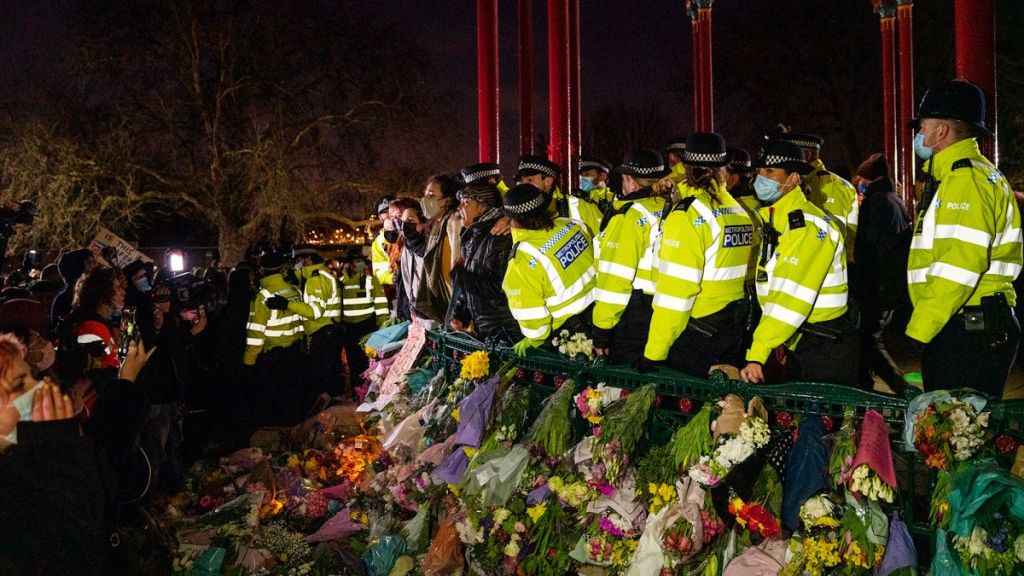
Of course, an incident that sparked discussion around protest recently was the Sarah Everard vigil and the shockingly poor police reaction towards it, which wasn’t actually a protest at all, but a gathering to remember and honour a woman who was completely failed by the Met Police as an institution. Images and videos of how the police manhandled people who were there, mostly women who were up on the bandstand, spread like wildfire, but as soon as the vigil was twisted through government and media narrative to instead become referred to mostly as a ‘protest’, the excuses for the behaviour of the police came to the forefront. It is as if ‘protest’ has now become a dirty, or taboo word in modern society. Again, you had enablers who claimed that the police were ‘just doing their jobs’ and I even had a discussion with someone who claimed that the police had to do what they did as highways were being blocked – holding a vigil on Clapham Common is not blocking a highway. If the police in the build up had worked with the organisers of the vigil to ensure it was co-ordinated and planned safely, then there would have been no ill feeling at all, but the police refused to co-operate as they had with so many gatherings before that point. It was telling that the re-framing of the vigil as a protest afterwards led to the police watchdog report that claimed the Met Police acted ‘appropriately’ not receiving anywhere near as much anger as it should’ve done. Because by that point, the stereotyping and shaming had already been done, the people there, in the eyes of a fair few, were there to cause trouble or shake things up. What else were the police supposed to do, after all? It’s an incredibly dangerous avenue for us to be heading down in which some gatherings are given greater credence than others just because of the government feeling towards them, or the feelings the police as an institution have towards them. It is important that we resist the push to label everyone in a group based on the actions, or the alleged actions of a few members of that group. Far too many times this has been done to cover up incompetence and greed and looking at the progression of this idea, a great threat is being posed to those trying to fight their corner from a position of lower power and authority.
Let’s take this concept of cracking down on protest to it’s extreme, because the extreme is where it is headed. The Police, Crime, Sentencing and Courts Bill had it’s second reading in the House of Commons and was voted through on the 16th of March 2021 and it makes for incredibly grim reading for those who hold the concept of protest and standing up for your rights dear. Although as usual, the bill includes movements that are actually relatively reasonable enough so that anyone voting or protesting against it is admonished, the darker and more fascist parts of it simply cannot be allowed to be passed. I will put down below just some of the most concerning points from the Bill that were raised and discussed in a brilliant article on the Institute of Employment Rights website, which I will also link in the reference section at the bottom.
‘Clauses 54-60 in Part 3 of the Bill effectively criminalise protests that cause disruption – defined in broad and vague terms – even in the case of one-person protests.
Clauses 54-56 and 60 allow police to place conditions on protests as a response to “the noise generated by persons taking part” as well as to impose penalties on those breaching such conditions if they “ought to have known” they were in place.
As well as amending the Public Order Act 1986 to tighten police control of protests, this section also introduces a new statutory offence of “intentionally or recklessly causing public nuisance”.
People found guilty of this new offence, which includes causing “serious annoyance” or “serious inconvenience” – or even just causing the risk that said annoyance and inconvenience will take place – are liable to be imprisoned for up to ten years if convicted on indictment or 12 months if convicted summarily.
Elsewhere in the Bill, similarly high sentences are imposed on those causing damage to statues and memorials, presumably as a response to the toppling of slave trader Edward Colston’s statue by Black Lives Matter protestors in Bristol. Under the proposed law, said protestors could be looking at ten years in prison. This – as many opposition MPs pointed out during the debate – is a longer sentence than that given for violent crimes against living people. Indeed, it is twice the length of the maximum sentence for assault causing actual bodily harm (five years).’
We’re in a place of placing the importance of material things over the lives of actual people. This desensitisation to the mistreatment of one another is not good, it is not healthy and it is not conducive to a free and progressive society. And yet, when people declare that protestors are ‘idiots’ or ‘thugs’, they are feeding into the very narrative that could see someone at risk of a ten year jail sentence purely for standing up for what they believe in. This sneering, shaming and patronising attitude has to stop, because this is the way that we are headed. It feels like all sense of nuance is disappearing, you either have to proclaim something as the best or worst thing in the world and there is no middle ground. That’s difficult when it comes to protest as it’s so often complex, with the reasons for the tensions reaching that point having deep rooted context that cannot and should not be dismissed or waved away. We need to stick together and stand for everyone to be heard, whether we agree with what they’re saying or not. This affects us all.
Division is what people trying to control others rely upon. If people in the media and those on social media denounce the protests based upon the actions of a small minority, then those abusing their power get away with their actions, time and time again. As I commented about some of the response to the United protest, there was never this level of indignation after the many poorly publicised stories of United fans being mistreated by the club. Nobody cared about the actions such as suspending a season ticket holder for missing a few games to attend cancer treatment, but everybody cares about the reaction. Nobody cared about helping those wishing to pay respect to Sarah Everard to arrange a lawful vigil, but everybody cared about the reaction to the police aggressively breaking up that vigil. It’s reflective of a society that has been forced to grow to respect things over people, we’re desensitised to people being mistreated, but property being damaged or football matches being postponed is somehow shocking and uncomfortable to us, when it should be the other way around. Violence isn’t right, but at the same time, those condemning are silent at the footage being shared of peaceful protestors outside Old Trafford being hit with batons, or a police officer running over to hit someone being held down by other officers four times while he was on the ground. Funnily enough though, it doesn’t seem like it’s considered fair game to categorise every police officer based upon those incidents.
So this isn’t just about football, or women’s rights, or Black Lives Matter, or any other protest on it’s own. It’s about everything, all of those together and more. If you agree with protest being clamped down on as long as it’s something that you’re not as concerned about, then it will eventually make it’s way to your door and affect protests about things that you do care about. This is about our right to stand up and say “enough is enough” and along with that right, those protesting also carry the right not to be judged by the actions of a few that attend too. I hate it when people call a huge group of protestors ‘thugs’ or ‘idiots’, as if it’s fine to classify thousands of people as one. I’m not naïve, I know that when it comes to protests, emotions run high and not everyone there is always attending with the right intention. But that shouldn’t detract away from the overall point of a protest. As much as protestors do need to show some form of consideration and responsibility, it seems as though there is a push to influence the mood in this country in an attempt to kill the facilitation of protest altogether. Let us not go down the dangerous route of dismissing each other’s feelings, struggles and righteous anger. Let us be more open, more understanding and slower to knee jerk, judgemental reactions. Engage with people, talk, listen. That’s the way that things should be and the further we drift away from that, the more we leave ourselves and others open to abuse without a voice to push back against that abuse. I stand in solidarity with all those who have protested and those who do protest. I have more in common with them than those who abuse and denounce them.
References & further reading:
Liverpool v Manchester United draw brings in record 4.5m viewers for Sky – SportsPro Media
Police ‘acted appropriately’ at Sarah Everard vigil – BBC News
What’s wrong with the Police, Crime, Sentencing and Courts Bill – IER
Police, Crime, Sentencing and Courts Bill 2021: protest powers factsheet – GOV.UK (www.gov.uk)
Manchester United fan appears to be punched by police officer in video footage of protest – Manchester Evening News
 Benson's Film Reviews