The Lighthouse Film Review

The sign of a strong horror film is one that can properly shake and unnerve it’s audience without the need for or over reliance on jump scares or over the top gore. Instead, those that use filmmaking techniques, sound, editing, dialogue, cinematography and acting, to create a sense of dread and fear are the ones that stick in the mind long after the film has finished. One of my favourite films from last year was Doctor Sleep, a film that managed to achieve horror without constant jump scares and The Lighthouse manages to do it to an even greater level, taking it almost past the horror genre and into a different mix of genres entirely, which in a way almost helps to make it even more terrifying than if it had remained solely within the horror bracket.

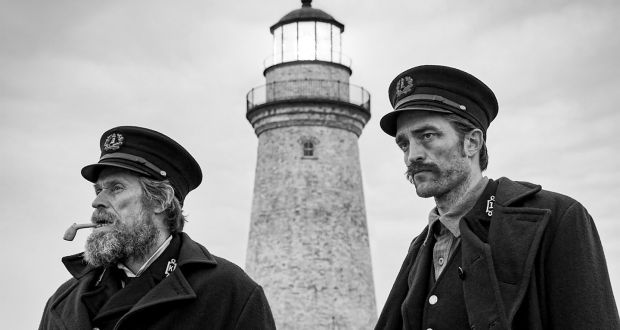
The Lighthouse, directed by Robert Eggers is a film set in the 19th century, centred around two men, played by Robert Pattinson and Willem Dafoe, who are working together as lighthouse keepers. As time passes and they become stranded, their sanity begins to slip and their relationship starts to dissolve, with the viewer being pulled into the madness as the tension between the two escalates. The plot itself starts from a very basic concept, but the film is really about the dynamic between the two characters, with supernatural and cosmic horror elements coming into play as the film progresses. The film is shot in black and white, with a 1.19:1 aspect ratio, most notably used in the 1920’s and 1930’s, giving the film an old fashioned feel, whilst also adding to the claustrophobic, boxed in feeling that the characters are going through, it’s an incredibly effective and interesting way to shoot the film and really makes it a great cinematic experience.

The use of black and white in the film is not only done for the purpose of making the film look old-fashioned, it also fits thematically, with the lighting being used to get across the concept of secrecy and paranoia within the film, both men seem to be telling their own lies throughout and keeping hold of their own mysteries, adding to the sense of unpredictability, something that is essential for this type of film. Other themes within the film are dominance and subservience, toxic masculinity, sin, positions of power and the rebellion against that power. These themes are put across in some obvious and not so obvious ways and part of the fun of this film is the discussion afterwards around what certain parts of the film meant, there are some really evocative shots within the film, disturbing and beautiful at the same time, with a lot of them almost resembling classical paintings. The film is quite rightly nominated for Best Cinematography at the Oscars, although it could be argued that it could have been put forward for more.

The screenplay, direction and acting are all brilliant here, with the screenplay sticking to this old type of language and committing to it, something that adds to the atmosphere and feel of the film. From reading reports before and after, the shoot for the film sounded really uncomfortable, but the fact that the type of film they wanted to produce was ultimately realised is a huge credit to Robert Eggers and the two main actors for being so invested, at the same time as the shoot sounding uncomfortable, the roles seem like a delight for any actor to play, with so much to delve into with them, as well as the amount of weight they have to carry for the film to come off, with all of the time in the film devoted to them being on screen. Pattinson and Dafoe had to bring absolutely everything to their roles to make the film work and they bring everything and a little bit more too. Pattinson plays a character who comes across as quite vulnerable, with a bubbling temper and feeling of inferiority beneath the surface. Dafoe puts in an absolute powerhouse of a performance, he’s always so involved in every film he stars in. There is one monologue scene here from him that’s absolutely stunning, anyone who has seen the film will know what I’m referring to. He switches between genuine sadness, rage, bitterness and solemn disappointment all within a few seconds and does it to great effect, proving himself once again to be one of the greatest actors around today.

The sound also deserves a mention when talking about what makes this film so impactful. From the very beginning, there’s a really unnerving sound of a bellowing foghorn, which becomes more prominent as the film goes on. There’s also this technique of whenever a character screams, the scream is made to sound incredibly distorted and twisted, giving it this otherworldly feel, perfect for the sections where the film moves into the realm of cosmic horror. The soundscape throughout is incredibly disturbing and pulls you into the world that Eggers has crafted, it has you feeling constantly on edge and uncomfortable, think of films such as The Shining for reference, that film is well remembered for the iconic music within it and I feel as though The Lighthouse cleverly uses sound to the same effect.

My excitement around this type of film being released cannot be understated. Sea shanties are going to dominate my Spotify playlists for the next few days, at least. The response to this film, as well as all of the different aspects that went into making it work, is not just a win for the film itself, but is a huge win for the horror genre overall. I really hope that the success of this film gives confidence to horror writers and directors going forward in having a bit of restraint, as it’s an absolute masterclass in producing a film dripping in gloomy atmosphere, returning horror to doing what it does best, having that effect psychologically and having an impact on the viewer past the point of a few cheap scares. The film asks a lot of deep, existential questions and sometimes these can be a lot scarier than any monster. Apart from the more supernatural elements, the very idea of being stuck in a confined space with another person, slowly going insane is scary enough on it’s own. It is the idea of horror in the mundane, horror in control and the feeling of being controlled, horror in repressed sexuality. Get to see this while you can in the cinema for a different type of experience, it’s a film that needs to be seen and appreciated. Original and creative, The Lighthouse is up there with my favourite films of the year so far.

Overall rating – 🌟🌟🌟🌟🌟/5
Parasite Film Review

One of the overarching themes around the films I’ve been reviewing so far this year is the ability of writers and directors to mix tones together. When this is done well, it can lead to incredibly intriguing films that almost defy genre and end up giving us something completely new and original. If done wrong, however, it can end up coming across as a mess and confuse the viewer as to what they’re meant to be feeling, if anything. The reason I raise the importance of this ability here is that I have rarely seen the control of tone displayed as well in recent years as well as in Bong Joon-Ho’s Parasite.

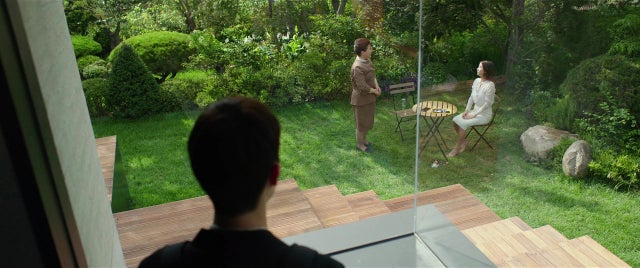
Parasite is a South Korean film about a poor family, where the son, Ki-Woo, fakes being an English tutor to get a job in the home of a rich family, the Parks. Upon entry, he begins to recommend members of his own family, pretending that they are qualified professionals. Really, that’s all you need to know going in, as knowing any more regarding the plot itself would really take away from the experience. From there, the film really digs into the comedy of the situation, whilst never letting the comedic moments take away from the more serious themes and situations. This is where the blend of comedy and tension is absolutely key, in some scenes you’re laughing before being caught off guard and stunned by something within seconds. The fact that this can be done without one ultimately affecting the other is a great credit to both the direction and the acting. The film spends the majority of the time in between the two households, with both beautifully realised and laid out for the viewer.

The acting across the board is impressive, everyone plays their roles incredibly well, although the two actors that stood out for me were Song Kang-ho as the father of the poor family, Kim Ki-taek and Park So-dam as the daughter of the poor family, Kim Ki-jeong. Both play their roles with a bit more complexity than a lot of the other characters, Ki-taek is a father who is dedicated and determined, whilst also struggling to keep his act together, a lot of his best acting is done through facial expressions, whilst Ki-jeong is a lot more confident and assured, she also adds to a lot of the comedic moments due to this, especially in the first half of the film as she begins to take control. Their performances were so strong and so crucial to this film either working or not that I think both were unlucky to miss out on Oscar nominations, when Bong Joon-Ho gives credit to the stars of the film for being able to elevate a screenplay already brimming with life and character, he is absolutely right to do so.

The film plays a lot with the concept of levels and the idea of spatial awareness. Levels come into play on both a wider and a smaller scale, both in the levels of the houses themselves and what that means in terms of status and where those houses are positioned and what that means for them as the film progresses. When I saw the film, it was followed by a satellite Q&A with the director, where he spoke about the initial conception of the film as a potential play. This makes a lot of sense, as the film puts in the work early on to make you aware of the space in both houses, where people and rooms are located and this knowledge and sense of awareness pays off massively later on in the film as events begin to escalate. This was something I really liked about the film that helped to make it feel more real and added to the suspense as the film went on.

The cinematography in this film is absolutely gorgeous, some of the shots in the Park household are so dreamlike and minimalistic, they really help to get across the absolute level of wealth it must take to live somewhere like that. This is of course contrasted with the Kim household and the neighbourhood that they reside in, especially in one late rain-soaked scene. There is a lot of foreshadowing in the film, the script and storytelling is very clever and this is a film that I feel will richly reward repeat viewings. A lot of the visuals are going to stick with me for a very long time too, there’s so many evocative shots and sequences I can think of. I feel that one of the greatest strengths of the film is that it doesn’t treat the situation as simplistic, the Kim family aren’t good just because they’re poor, just as the Park family aren’t all bad because they’re rich. There are questionable decisions and ideologies on both sides and it makes for a much more interesting film and story overall.

One quote that has resonated with a lot of people comes from a recent awards acceptance speech from the Parasite director, Bong Joon-Ho – β€œOnce you overcome the one-inch tall barrier of subtitles, you will be introduced to so many more amazing films,” Parasite gets it’s wide UK release this Friday and in this sense, I could not agree with this quote more. This is a film that not only deserves the hype, but surpasses it and I can’t recommend it enough. It’s an absolute ride, funny, tense, thought-provoking and up there with my favourites of the year so far.

Overall rating – 🌟🌟🌟🌟🌟/5
The Gentlemen Film Review

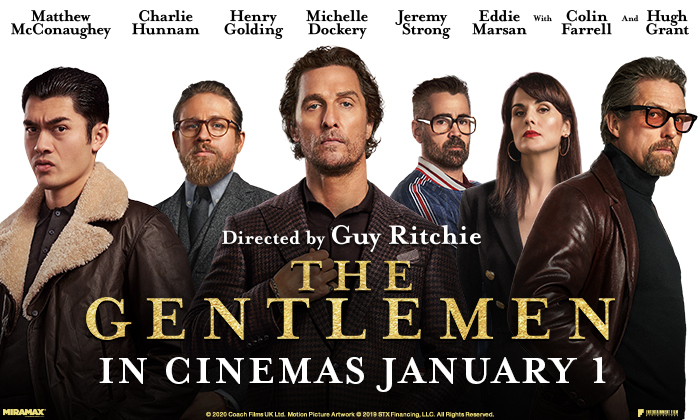
The Gentlemen, Guy Ritchie’s return to the crime genre, with the trailer being reminiscent of his previous classics Lock, Stock and Two Smoking Barrels and Snatch, was a film that looked like it was going to fit right with my usual tastes. His dialogue is usually snappy, the comedy always hits the right notes and the soundtrack always adds to the film as a whole too. The cast list for this film includes some of my absolute favourite actors as well and while some of them put in their usual impressive performances, this was unfortunately a film that I just couldn’t get into at all.

The film tells the story of Mickey Pearson, played by Matthew McConaughey, an American gangster in London whose main enterprise is built on dealing in cannabis. He is rumoured to be looking to sell on his business and retire from the crime empire that he has built up, which attracts the attention of other gangsters looking to fill the power vacuum created by Pearce’s potential retirement, most notably Chinese gangster Dry Eye, portrayed here by Henry Golding. A large chunk of the story is told to Pearson’s right hand man by a seedy journalist/scriptwriter who seems to be getting involved through his own interests, these two are played by Charlie Hunnam and Hugh Grant respectively.

This framing device and the early parts with Hunnam and Grant were the parts that didn’t particularly work for me. They seem to slow the film down a lot and even though the unreliable narrator angle can create some clever moments, it took away being able to buy into and emotionally invest in a lot of the main characters. Hugh Grant is playing massively against type here and although that is initially interesting to see, after a while it became a little one-note and grating for me, pulling away from moments and characters I wanted to see a lot more of. The comedic tone also seems to be all over the place, from previous films there’s already a set knowledge of Ritchie’s sense of humour, but rather than playful a lot of it seemed to be mean-spirited. Explicit and edgy humour does have a place and can definitely work, but here it seemed to be doing a lot of it for the sake of shock value which again, took me out of the film in a huge way.

That doesn’t mean the film is a complete misfire though. Colin Farrell’s performance in In Bruges is one of my favourite comedic performances ever and he’s brilliant again here, stealing a lot of the scenes that he is in. McConaughey also puts in a really slick performance, with a few of his scenes being the best parts of the film too. He manages to pull off a really intimidating, yet charming portrayal of a gangster in this film and you can see why he was chosen for the role. However, we spend large amounts of time away from his character Mickey Pearson, at times when I was finding him to be one of the more intriguing characters, with the unreliable narrator of Grant’s character taking away from bits of his story too. The more Charlie Hunnam comes in to the film the better it gets as well, eventually he seems to almost take over as the main character and we even see an appearance from Mancunian rapper Bugzy Malone, who does a great job playing one of Farrell’s henchmen. I can’t help but feel after watching the film that they may have all been better serviced if the script and storytelling had been a lot less convoluted and a little less pretentious.

The main word that sums up The Gentlemen for me is ‘disappointing’. In a lot of moments it feels like a pale imitation of Ritchie’s previous work and style, when it could have been so much more. The general reception to the film seems to have been mostly positive, maybe a re-watch of the film feeling more comfortable and aware of the framing device, as well as the flow of the narrative, might give me a better experience of it. There definitely are things to enjoy here, but a lot of those were immediately soured for me by wasted opportunities, cheap jokes and weak storytelling. From this director and cast, there was definitely the potential there for so much more than we got.

Overall rating – 🌟🌟/5

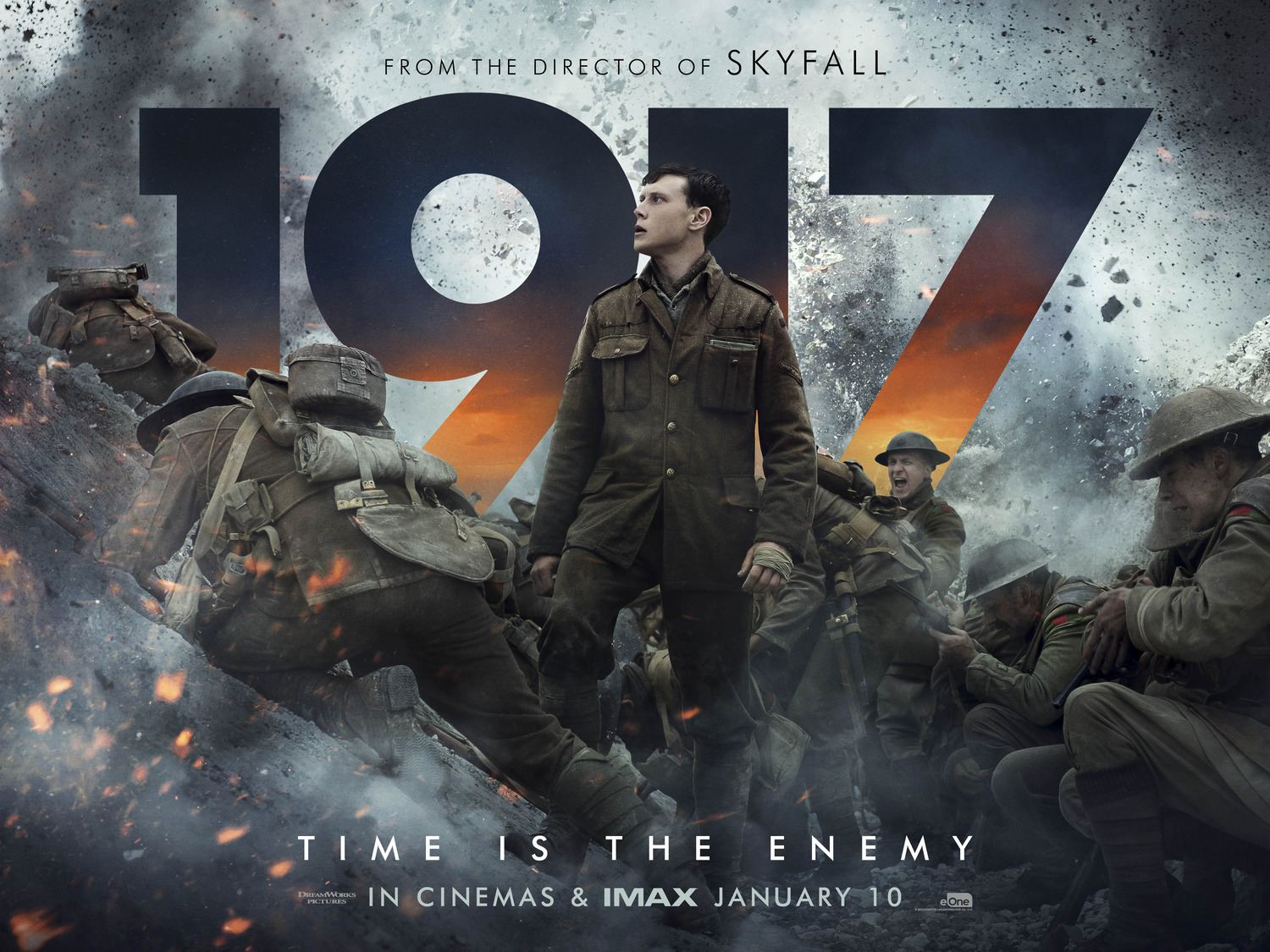
1917 Film Review

Being a huge fan of war films, with Saving Private Ryan being a personal favourite and having seen a behind-the-scenes feature on how this film was shot, as well as knowing about the Oscar nominations it has received, my excitement before seeing 1917 was strong. My biggest concern before going in was the potential for the way the film was shot, making it look as though it was all done in one take, to come across as gimmicky, but did this and the film itself hold up and put across an authentic war time experience on the front line?

For the most part, it does and in a technically astounding way too. 1917, directed by Sam Mendes, tells the story of two British soldiers, played by George McKay and Dean-Charles Chapman, who are tasked with the mission of making it across the battlefield to deliver a message warning of a German ambush. One soldier is experienced and hardened, whilst the other is slightly more naΓ―ve, creating a nice contrast as they move along on the mission together. The filming technique and the effort that was put into it are both really great, leading to some visually breath taking shots and set pieces. Both of the main actors do really well and there are cameo appearances from some British acting veterans, although they don’t seem to have been too involved in the marketing, so I won’t spoil them here.

The soundtrack for 1917, composed by frequent Mendes collaborator Thomas Newman, is a key part of what makes the film work, ramping up the urgency when it needs to, but also hopeful in spots as well as adding an overall epic sense of scale to the film and the journey that these characters embark on. Another thing about 1917 that really impressed me was the way that any injury or any attack the characters are affected by carries long term consequences. For example, if they get a cut or a wound, this will have to be tended to, with the effects of it sometimes still being felt for the rest of the film. This helps to give the characters an air of vulnerability and humanity, which sets it apart from some war films, where characters get up from explosive attacks without so much as a scratch – it makes everything feel so much more real.

This leads onto, for me, the best result of the choice to shoot the film as though it is all in one take, which is to give us a closer view of the battlefield and the trenches than, to my knowledge, a viewer has ever seen in a war film. We see the gory injuries, we see the dirtiness of the war and just how grimy, tight and uncomfortable the trenches were. 1917 doesn’t shy away from showing us this, although it isn’t done in an over the top manner, feeling very grounded, with the gore and action being shown in flashes, only adding to it’s impact. There is a real sense of spatial awareness, most probably down to Mendes’ past theatre directing work, there is always something happening in the background of the frame, with all of the characters and the environment constantly in play, which makes the world portrayed here feel really alive and pushes the feeling of immersion even further.

Perhaps the only thing that could be held against 1917 is it’s commitment to the filming style, which worked for me for the most part, but I could see others maybe having an issue with how it affects the film narratively. The film is very much a point A to point B adventure, but this is down to having to keep up the illusion of it all being filmed in one take. It does feel as though it is a string of sequences, but those sequences are spectacular and work incredibly well, with two of my favourites being saved for near the end of the film, where we get some stunning shots as the film reaches it’s climax. One of the sequences creates a hellish, surreal atmosphere, combining the score with beautiful lighting and imagery.

In the same vein as Jojo Rabbit, 1917 updates the idea and concept of a war time film, adding new dimensions to a type of film we have seen many times before. It is undeniably important that we continue to make, watch and discuss these types of films, so that these horrific events are never forgotten and the memories of the people who participated in them are kept alive. While Jojo Rabbit did it through the guise of a dark comedy, 1917 puts the viewer right in the trenches, creating an experience that will not be forgotten quickly and reminds us that old stories can continue to be told in new and creative ways.

Overall rating – 🌟🌟🌟🌟/5

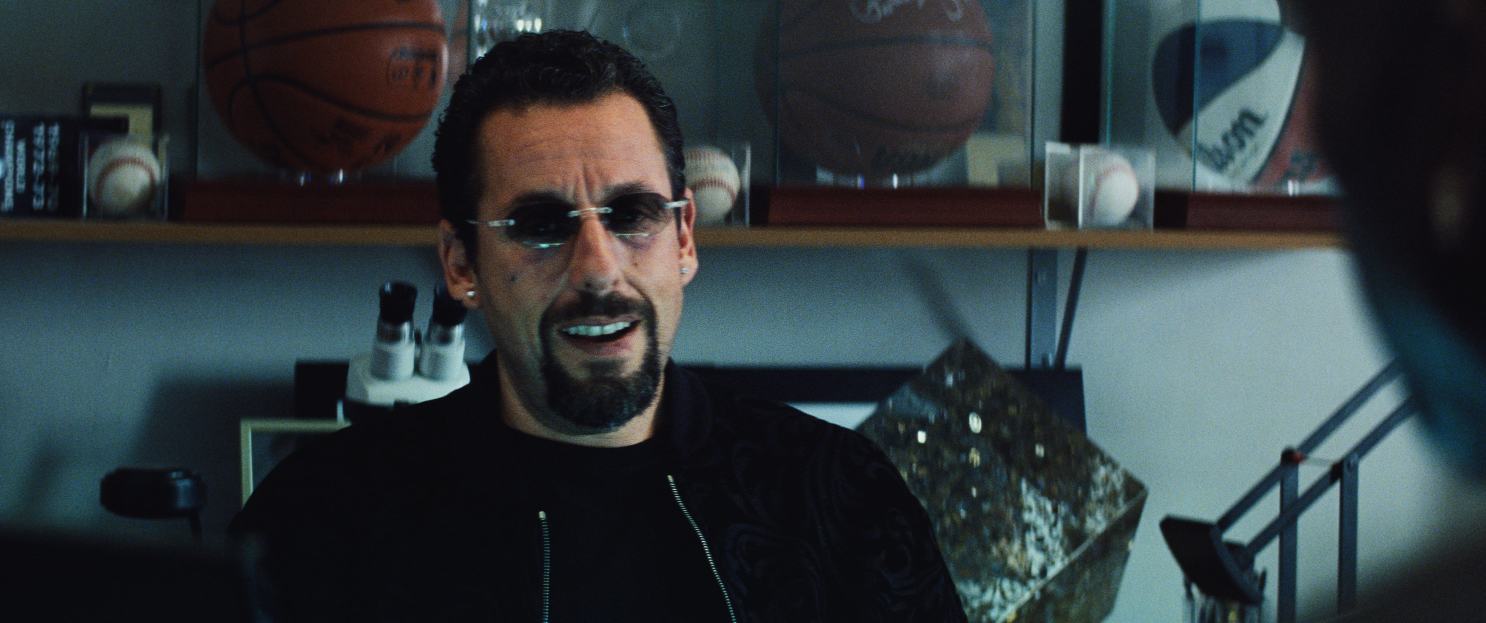
Uncut Gems Film Review

“This is how I win”

I don’t think a film has made me feel as tense in a long time. Uncut Gems, directed by Josh and Benny Safdie, tells the story of a jewel dealer named Howard, played by Adam Sandler, who owes several debts to several different people due to his gambling addiction and follows his attempt to try and make the money back to pay these debts through the sale of a rare uncut black opal gem. The film reminded me in a way of Nicolas Winding Refn’s first feature film Pusher, in the sense that the focus is firmly on a character who seems to keep making the wrong decisions, with the luck never running for him and the walls around him closing in. When I say that the film follows his attempt, it really does follow it, we spend a lot of time with Howard and this helps to really integrate us into his journey as the film goes on.

This is another film that has been out in the United States for a while, now on a limited release in the UK starting from the 10th of January and due for a Netflix release on January 31st. Before seeing Uncut Gems, one of the main phrases I had heard used to describe the film was ‘uncomfortable’. It really is an edgy film, with characters talking over each other a lot of the time, tensions flaring up suddenly in many scenes and then through the narrative points of Howard making so many risky decisions in dangerous situations. I could see this film potentially being divisive, especially when it premieres on Netflix, where if the viewer isn’t properly immersed in the film the effect the Safdie brothers are trying to get across might be slightly lost, but it really worked for me. The atmosphere the film portrays is one of a man who constantly lives life under pressure, looking for the next thrill, the next win and once the story gets going and you become immersed into it, it puts you into the mindset of Howard and sets the pace of the film brilliantly.

This is where Sandler’s performance comes into play. For me, the film lives and dies based upon Sandler’s performance. He doesn’t play a particularly likable man, he has no sense of morality, no real sense of loyalty and is ultimately selfish. This could have made the film difficult to watch, as mentioned earlier, we spend pretty much every scene with this character. However, Sandler adds a real sense of nuance and layers to the character of Howard. Using his comedic skills, there are moments he manages to add warmth to his performance and you almost feel sorry for him in a few scenes, despite his actions and how he treats a lot of the people around him. Although Sandler has released some questionable films in past years, with Jack and Jill being one of the more bizarre releases, this performance is his best yet, with one particular scene towards the end showcasing a stunning ability to deliver his dialogue in a confident manner and making you buy into this character and his motivations, even though you might not necessarily agree with his actions.

The three main components that make Uncut Gems work apart from Sandler’s excellent performance are the sound design, the editing and the direction from the Safdie brothers. The sound throughout this film is constant, it’s an incredibly noisy film, apart from one or two scenes, with many variations of sound in different scenes, phones ringing, people shouting, people knocking on doors, creating a hectic and overwhelming feeling, this combined with the editing, which helps to keep the pace of the film quick, but not so quick that you miss out on important details, really helps to elevate the film and make it feel like more of an experience, rather than just watching the plot unfold in front of you. The plot itself isn’t too complex, but the way it’s presented is masterful and shows a real amount of love for the crime genre. The film is also currently in the top ten for the uses of the word “fuck”, with it being used 500 times, at a rate of 3.7 uses a minute. This feels very natural for the environment and characters and again helps to ramp up the tension and the feeling that these characters are constantly on edge.

Of course, with all of the hectic sound going on and the editing style, the strong direction is needed to make it not feel as messy as it could have been. The Safdie brothers manage to make the whole film feel more naturalistic, the scenes where characters speak over each other are really difficult to achieve without becoming too overbearing, but they manage to make them feel quite naturalistic. The rest of the cast is good as well as Sandler too, Idina Menzel doesn’t get too much to do, but does well in the scenes she has, while newcomer Julia Fox is the other standout in her debut film performance as the saleswoman in Howard’s store as well as his mistress. We also get two real life celebrities playing themselves in the film; The Weeknd and basketballer Kevin Garnett. While the Weeknd’s appearance is shorter and more of a cameo, Garnett’s character is very prominent in the plot and although for both of them their lack of acting experience does show here and there, they help to add realism to the film and more credence than if the film had used a fictionalized pop star and athlete.

At the time of the release of this review, it is now known that Adam Sandler hasn’t made the cut for the best actor nominations at this year’s Oscars. It’s been a really competitive year, especially in the best actor category and with A24 being known for not getting as involved with marketing for awards due to budgeting reasons, it was maybe inevitable that Sandler wouldn’t make the cut. I really hope that doesn’t dissuade him from appearing in more films of this nature though and maybe letting other directors guide his talents to create characters that resonate with the viewer. In Uncut Gems, he’s funny, malicious, pathetic, hateful and sympathetic all at the same time, which undeniably takes a lot of talent. Whether you see this during it’s limited theatrical release or when it hits Netflix at the end of the month, I’d highly recommend this anxiety fuelled crime thriller with a standout performance at the heart of it.

Overall rating – 🌟🌟🌟🌟🌟/5

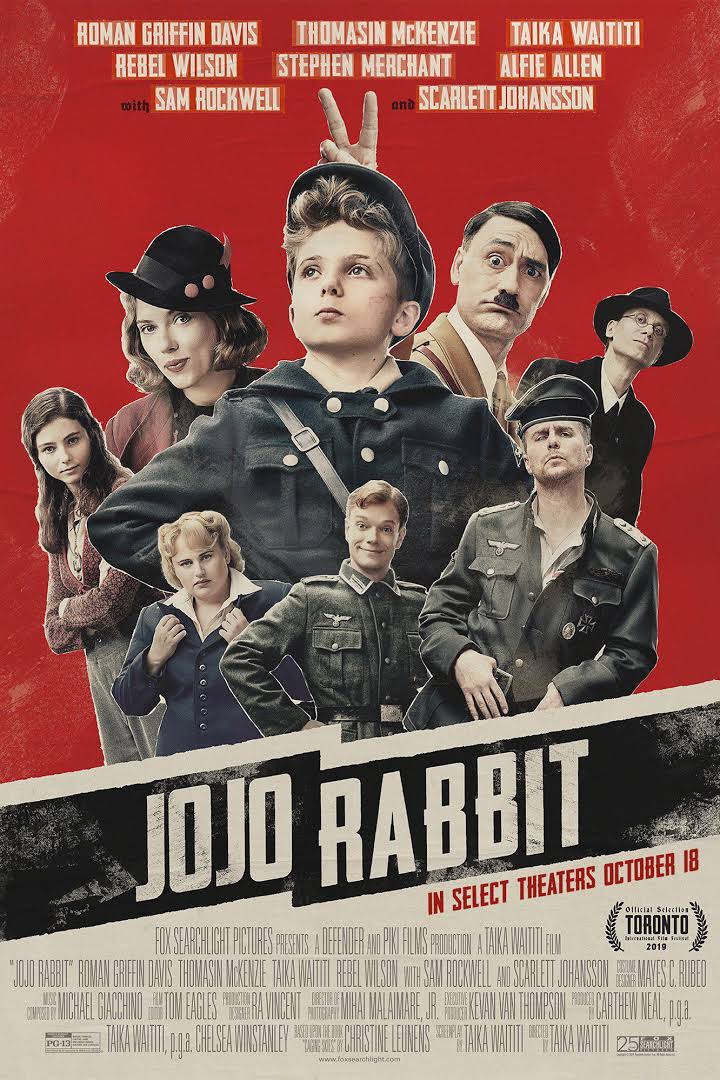
Jojo Rabbit Film Review

After, in my opinion, one of the best years in film for a while in 2019, it was time to start off 2020 with a film in Jojo Rabbit that has already seen a release in the United States, as well as limited previews here in the UK. With there already being Oscar buzz around the film, specifically in the Best Adapted Screenplay category, I was really excited to check it out, especially being a fan of Taika Waititi’s previous work and being intrigued by the plot.

Jojo Rabbit is a film written, directed by and starring Waititi as a young boy’s imaginary friend, Adolf Hitler. The young boy, Jojo (Roman Griffin Davis) is a 10 year old Nazi fanatic, who wants to join the Hitler youth, but is caught in a dilemma when he finds his mother (Scarlet Johannsen) is hiding a young Jewish girl (Thomasin McKenzie) in their attic. It is very loosely based on the book Caging Skies by Christine Leuneuns, but Waititi introduces a lot of differences from the source material. Even from the plot description, it is clear that this is another film where Waititi, as he has in previous films such as Hunt for the Wilderpeople and Thor Ragnarok, is attempting to mix lighter moments with a darker overall plot. The biggest risk here is attempting to do it with a highly sensitive topic, whilst highly sensitive iconography, such as the swastika is on show. In Jojo Rabbit, Waititi shows his mastery over tone and his ability to intertwine the light hearted with the heavier moments and in a way, make the lighter moments contrast to make the heavier moments hit harder. The film is very reminiscent of Wes Anderson, especially in the earlier scenes, with the shot composition and the use of vibrant colour, this works really well on two levels, firstly it helps to put the viewer into the mindset of the main character Jojo, who has been indoctrinated into the Nazi ideology and sees this really depressing moment in time in quite a whimsical way, through a child’s eyes and it also helps to keep the viewer engaged, adding a lot of life and character to the world around Jojo.

Although all of the cast act exceptionally well in the film, including the main star Roman Griffin Davis, the three standouts for me personally were Stephen Merchant, Thomasin McKenzie and Sam Rockwell. Stephen Merchant, in his brief appearance as a Gestapo officer, provides a surprisingly menacing performance, as well as displaying his usual comedic qualities to show that aforementioned contrast between dark and light that Waititi portrays so well. Thomasin McKenzie as Elsa, the Jewish girl hiding in Jojo’s attic, plays a part that could so easily have been one note, but instead adds a real sense of personality, humour and depth to the character that makes you sympathize with her without that sympathy relegating her to merely a victim, as she does show courage and strength in the face of adversity. In a similar way to his role in Three Billboards, Sam Rockwell takes a character who at first seems like he will be easy to despise in a Nazi officer who runs a Hitler Youth camp, but adds nuance to him. Rockwell has really become an actor where whenever I see his name on a cast list, I’m excited to see what he manages to do within the film, he’s always great comedically, but his acting ability within the more serious and key emotional moments seems to be getting better and better with each film he appears in.

The only problem within the film for me comes narratively. As this is a non-spoiler review, I won’t be able to delve into it too deeply, but the narrative issue comes from Taika’s imaginary Hitler. It is a really well acted part and provides a lot of the film’s comedic moments, but it doesn’t fully work for me in the sense that it doesn’t feel like it adds too much to the story. It feels like there could have been a little more progression with the idea of it, but ultimately the idea isn’t as involved in the film for a long while and when it returns, it feels like a bit of an after thought. It would’ve been more interesting to see the idea either fully realised or cut out altogether, although then it may not have felt as much of a Waititi type film. Apart from this minor potential narrative flaw for me, everything else, the acting, direction, cinematography, writing, soundtrack is all absolutely top level and helps to contribute to Jojo Rabbit being a really enjoyable and at times, very emotional, hard hitting film.

One of the best ways to fight back against hatred is to make fun of it. Once you turn something into a joke, you take away all of it’s power. Waititi crafts a story which finds the right balance, it never treats the subject too lightly, but it also heavily mocks the Nazi ideology, especially the beliefs they spread about the Jewish people and helps to reduce Hitler into a pathetic character, rather than the imposing man he is sometimes portrayed as. It elevates the idea of a satire into the next level and I came out of the film excited to see what the actors within it and Waititi move onto next. It’ll have a lot of competition for awards, as I said, I consider 2019 to have been a really strong year, but I expect at least a Best Adapted Screenplay nomination for Jojo Rabbit – it’d be well deserved.

Overall rating – 🌟🌟🌟🌟 /5

Design a site like this with WordPress.com
Get started